
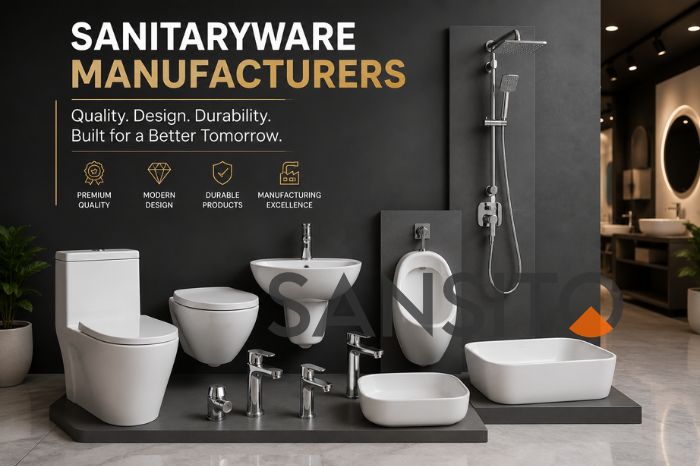
How Automation Is Rewiring Sanitaryware Manufacturers in India
Manufacturing is in a new era where precision, speed and consistency are key to success. In industries, automation is redefining production process by making it more efficient, less manual and of better quality. This is not an exception to the sanitaryware industry. In today’s landscape, Sanitaryware manufacturers in India are turning towards automation to satisfy the expectations of their customers and enhance their competitiveness in the domestic and international market.
There’s no longer a perception that automation will replace craftsmanship. Instead, it’s a strong tool that can be used to support the manufacturing expertise so businesses can create sanitaryware that additionally satisfies growing requirements for design, sturdiness and performance standards.
Manufacturing Beyond Traditional Methods
Skilled craftsmanship coupled with traditional manufacturing methods was critical to sanitaryware production for many years. Although these techniques laid the groundwork for the industry, the increasing demand and changing design needs have stimulated manufacturers to take their production plants to modern times.
Material preparations, handling of moulds, glaze application, firing control and quality inspection are a few of the processes that have become more consistent thanks to automation. These developments help to reduce variations and increase production efficiency.
This creates a manufacturing environment of traditional skills and technology.
Precision Has Become a Competitive Advantage
The dimensions, surface finish and long term durability of the bathroom fittings are all to a high order of precision. Small differences can impact on installation and the appearance and performance of the product.
Automated Manufacturing Systems enhance precision by ensuring that the manufacturing parameters are controlled throughout the manufacturing process. The use of digital controls, cutting-edge machines and automated inspection systems allows manufacturers to produce consistent quality in each production batch.
This uniformity adds to the confidence of customers and helps in implementing larger projects that require uniform quality.
Smarter Quality Control
Quality assurance has come a long way from the end-of-the-line inspection to monitoring during the manufacturing process. Today, deviations are not only detected as finished product deviations but are also being detected by automated systems in the manufacturing facility.
Monitoring of vital production processes in real-time helps manufacturers maintain consistency in product manufacture, reduce waste, and optimize the utilization of resources. This innovative approach works well in ensuring quality in manufacturing as well as improving efficiency of operations.
Quality has become a built-in characteristic and not an added one.
Quick response to market demand
Bathroom design is becoming more sophisticated and consumer preferences are constantly changing. Manufacturers are required to turn their heads to the winds of change and adjust their requirements and output according to the changing trends.
Automation helps to increase manufacturing flexibility through better production planning, decrease production delays and facilitate effective product line changes. This responsiveness enables manufacturers to bring out new designs more effectively yet keep quality consistent.
In the modern market, the speed is an important competitive advantage.
Efficient production is the key to sustainability
Environmental responsibility enters the field of manufacturing strategy.The need for environmental responsibility in manufacturing becomes an indispensable part. They are intensifying efforts to minimize waste of materials, energy and natural resources during manufacturing.
By optimizing raw material usage, improving process accuracy, and minimizing production losses, automated systems help achieve these goals. Manufacturing that is more efficient helps to conserve the environment and enhances long-term business productivity.
Responsible production now has become a major expectation of the industry more than an option.
Supporting Global Manufacturing Standards
India has emerged as an important exporter of sanitaryware to the international market. Global buyers require manufacturers to provide consistent quality, reliable production capacities and products that are recognised.
By using automation, manufacturers can meet these expectations with a better process control and production consistency, and greater manufacturing reliability. The attributes enhance India’s reputation as a reliable choice for sanitaryware manufacturing.
Technology is playing an important role in enabling Indian manufacturers to compete on quality and scale.
People and technology working together
In spite of the fast-paced technology evolution, qualified manpower is playing a key role in the success of manufacturing. Engineers, designers, technicians and quality specialists still make production decisions, and are still using automation to enhance accuracy and efficiency.
Instead of replacing human skills, automation frees up staff to innovate, develop their products, and continually improve. The production systems of the partnership will be much stronger and more capable of adapting to changing customer requirements.
Those enterprises which succeed in integrating both technologies and experience into the operation of the enterprise are the ones which have the future.
Looking Forward
The next wave of manufacturing will be characterized by intelligent production, integration, and innovation. Those manufacturers who choose automation while preserving their craftsman skills will have better chances of survival and prosperity in the long run since customer requirements are rising.
The introduction of automation in the Indian sanitary ware manufacturing industry is an example of strategic innovation to improve quality, sustainability, efficiency, and competitiveness.
Final Words
While the sanitary ware industry may not necessarily have been renowned for its technological innovations, automation is slowly bringing about changes in the construction of the warehouse. Though the sanitary ware industry may not be particularly renowned for its technological innovations, it is automation that has silently contributed to the transformation of the industry into a more sophisticated, more accurate and responsive producer to fit the requirements of the current market. This technology helps manufacturers manufacture products of better consistency.
Given the dynamic nature of the industry, Indian sanitary ware producers who invest in automation, design and engineering technology will always stay ahead of the game.

0 comments