
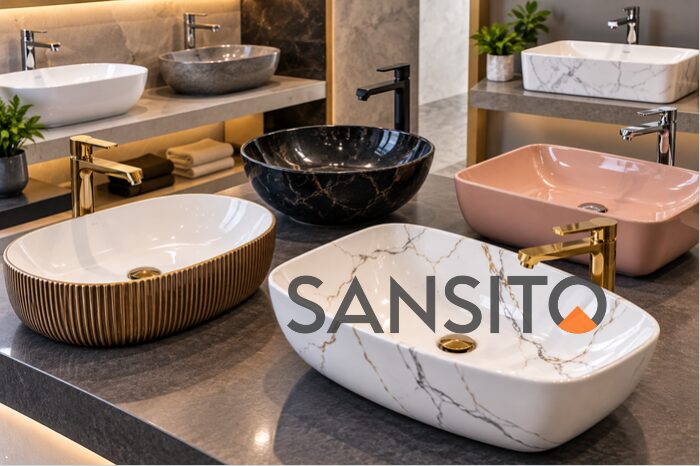
The Role of Negative Space Around a Designer Wash Basin
For bathroom design, there are so many aspects that people might focus on, such as tiles, mirrors, lighting and fixtures. However, the absence of objects in the space separating them is as significant as the presence of objects themselves. A designer wash basin can be adorned with an ornate appearance and luxurious finishes, but its effect will be determined in part by how much room is provided around it and how it is organized. Negative space can provide the visual breathing room, enhance accessibility and help individual design elements stand out, without crowding the bathroom.
Understanding Negative Space in Bathroom Design
Negative space is the space that surrounds and penetrates the objects. In a bathroom, it would be the space behind the toilet, between fixtures, and in front of the basin where no use has been made of the countertop surface.
I feel this area is not being used. Connects the basin, mirror, vanity, storage and other elements of the architecture. A well-balanced relationship between the two can create a sense of order and contentment in the bathroom.
A small washroom might just be a basin with some carefully designed space to clear, while a bigger bathroom may have more space left empty to create a sense of space. The goal is not to leave as much space as possible, but to intentionally fill the space.
Why Proportion Changes the Experience
Basin size (as perceived) is partly a function of context. While a large basin on a narrow countertop can be quite assertive, a large basin on a proportionate surface can appear balanced.
The size of the basin in terms of width, depth and height also plays a role. The size of the room, the amount of wall space and the distance to other fixtures will influence the location of the basin.
Such proportionate judgments affect not only the look, but also the usability of the website. A neat and tidy arrangement should give ample space for washing, access to taps and storage nearby, without compromising on comfort.
Lighting Gives Empty Space a Purpose
Light brings the connection between a fixture and its environment to life. Installing a mirror light will help to catch the eye; natural light can add soft reflections along the side and under a wall-mounted light.
Planning negative space along with lighting makes the shape of the basin more apparent. Visual clutter can be eliminated, making curves, edges and surface finishes stand out.
Practical considerations are also important when considering lighting. Decorative touches can detract from the convenience of tasks around the basin, and should not be done at the expense of the proper amount of light.
The Wall and Countertop Matter
Surfaces around a basin can enhance or challenge the basin. If the form of the basin is unique, the wall finish may be kept somewhat understated. However, a basic basin may function well with textured tiles and/or a well-chosen material backdrop.
That’s the same for countertop space. Allowing some space alongside the basin makes it easier to have all the daily necessities without crowding the fixture. The amount of space required depends on the bathroom layout and the needs of its users.
It’s not so much what they look like alone as what they look like together that matters for architects and homeowners.
Negative Space in Compact Bathrooms
When planning smaller bathrooms, every centimetre matters, so it’s important to make sure you’re planning carefully. Exposing more of the floor with a wall-mounted basin might provide a lighter look, while a smaller basin might save circulation space.
However, reducing the size of a basin isn’t always the answer. The designer needs to take into account comfortable reach, mounting height and plumbing requirements, as well as room for safe use of the fixture.
Good basin layout involves the proper size of the basin and how much space is needed around it. Negative space is useful when it enhances visual openness and experiences of movement in everyday life.
Minimalism Without Losing Function
Minimalist bathrooms are a testament to how simple design can make each fixture stand out. The few decorative elements make the form and material of the basin the focal point of the room.
However, small is not necessarily bare. There are also storage, taps, accessories and cleaning access to consider. Unless it is used in a practical way, an otherwise beautiful countertop can easily become cluttered with items that are needed.
Good design is thus the combination of simplicity of form and utility in usefulness.
Final Words
A designer wash basin is not just about design; the importance of negative space around it goes beyond that. It affects the proportions, lighting, movement, surface relationships and overall atmosphere of the bathroom.
If an open space is designed as carefully as fixtures and finishes, it can look better balanced and more functional. The basin is no longer a stand-alone object; it is now part of a well-balanced interior where spatial qualities, material and its use are integrated.

0 comments